.
.
.
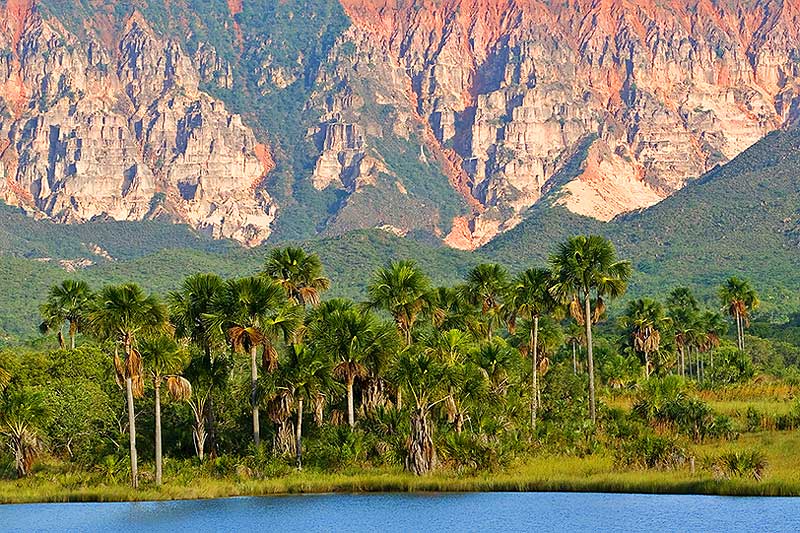
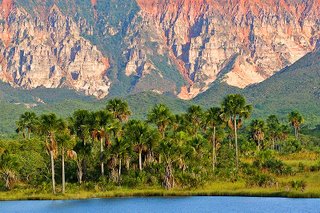 Mauritia palms (“buriti”) grow mainly in humid areas,
forming the so called "veredas"
PHOTO: © Daniel De Granville, 2007Following on with the sequence of stories about the
trip through Brazilian ecosystems that I did in January, today I’ll talk about the region known as the Jalapão, which is turning out to be one of the country’s most promising ecotourism destinations and, surely, a place much sought after by nature photographers.
Located east of the State of Tocantins, on the border with Bahia, Piauí and Maranhão States, the
Jalapão has an area of approximately 53,000 km² (20,500 sq mi) covered by typical
Cerrado vegetation, with plants such as the “buriti” (
Mauritia palm), the “lixeira” (
Curatella rough-leafed tree) and the renowned “capim-dourado” (
Syngonanthus golden grass) – from which the
region’s most typical handicraft is made.
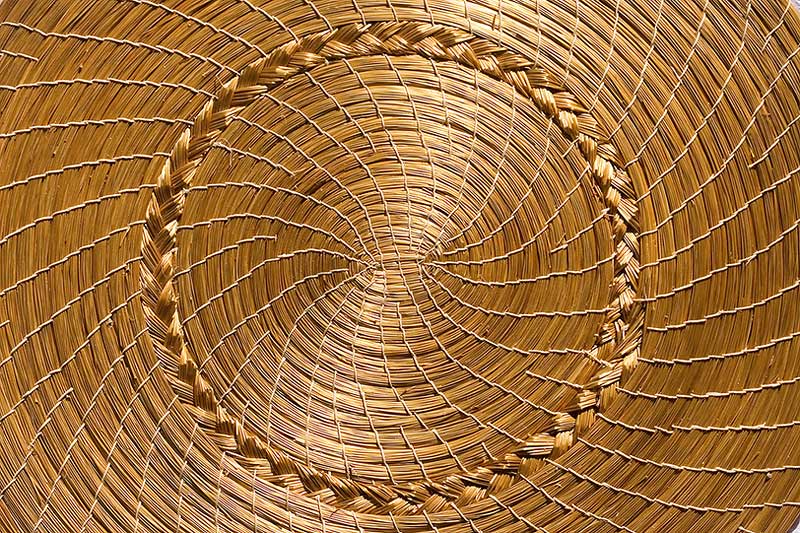
 Articles like baskets, purses, jewelry and ornaments
are made from the golden grass
PHOTO: © Daniel De Granville, 2007Beyond doubt, the coolest way to know the Jalapão is by staying at
Korubo’s safari camp. The whole staff and operation are prepared in such a way that visitors feel entirely at ease and see the region’s highlights, without leaving the environmental awareness behind.
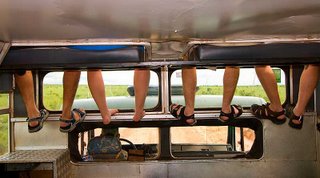 Great panoramic view aboard Korubo’s safari truck!
PHOTO: © Daniel De Granville, 2007For nature photographers, maybe because the time of year was not the best, I didn’t feel any special potential for wildlife photography (but please keep in mind that I might be spoiled by living near the
Pantanal!). The best shooting opportunities were the beautiful landscapes with rivers, waterfalls, mountains, tablelands and dunes.
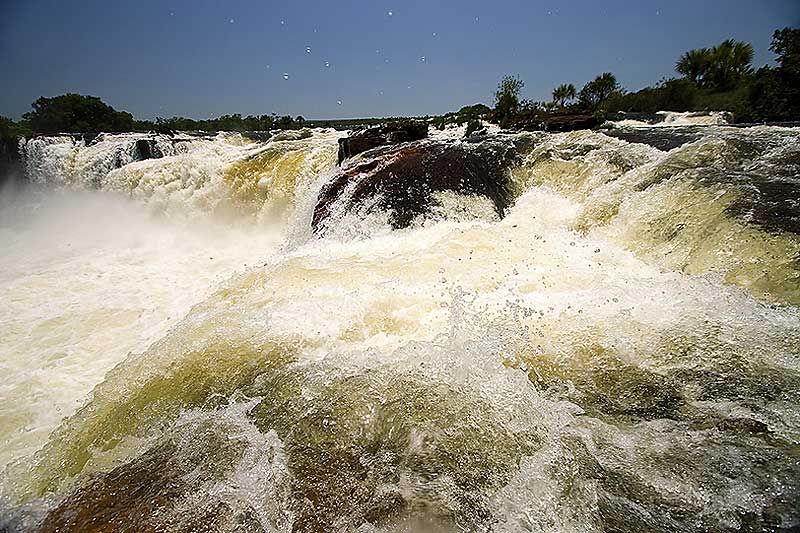
 Velha (“old lady”) Waterfall, whose impressive volume of water
highly contrasts with the desert-like landscape that surrounds it
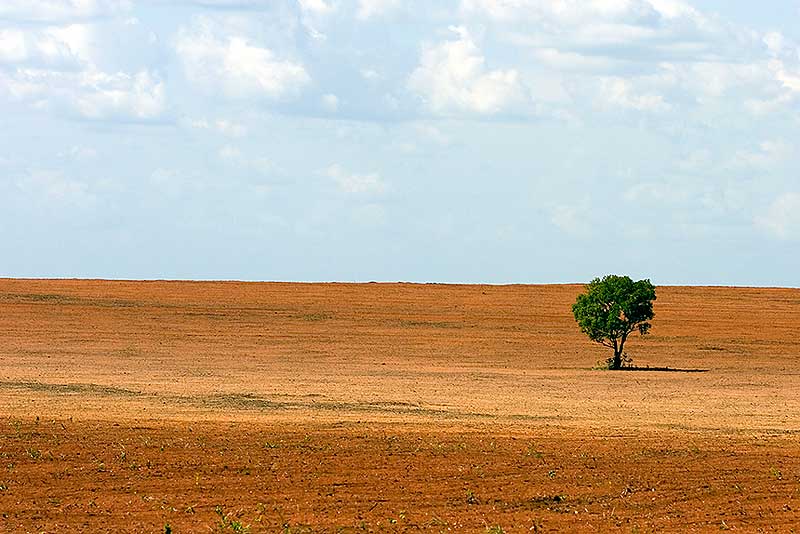
PHOTO: © Daniel De Granville, 2007The only con is that, pretty much like it has been happening with the Amazon and other parts of the Cerrado, the huge soy bean crops – without proper environmental care – pose a serious threat to this ecosystem. The hope now lies in the creation of more
conservation units, such as the Jalapão State Park, which can control potentially impacting activities and ensure the maintenance of singular environments found in the region.
 A single tree entirely surrounded by soy seeds...
PHOTO: © Daniel De Granville, 2007.
.
.